Textiles & Bedding
Cashmere in Pillowcases: What a Cotton Blend Brings to the Bed
A cashmere pillowcase and a cashmere-filled pillow are two very different things. In a cotton-rich cover, a modest share of the prized animal fiber can add softness and a subtly luxurious hand, while cotton remains the main ingredient. Here’s how to read the blend, understand the weave and decide whether this kind of pillowcase suits your sleep routine.
First, what does “cashmere pillow” mean?
The phrase sounds straightforward until you start shopping. “Cashmere pillow” might describe a pillow filled with cashmere, a cushion wearing a cashmere cover, or simply a pillowcase made with some cashmere in its fabric. Those are not interchangeable products. The fiber may be in the part you sleep on, the part that provides support, or nowhere at all if the description is using “cashmere” loosely to suggest a soft feel.
That distinction matters. A pillow’s fill affects its loft, firmness and support. A pillowcase, by contrast, is the textile layer touching your cheek and hair. Its fiber content, construction and finish contribute to how it feels, how it handles moisture and how it should be cared for. So before treating a listing as a promise of cashmere-filled comfort, look for the material breakdown and identify exactly which part of the product contains the fiber.
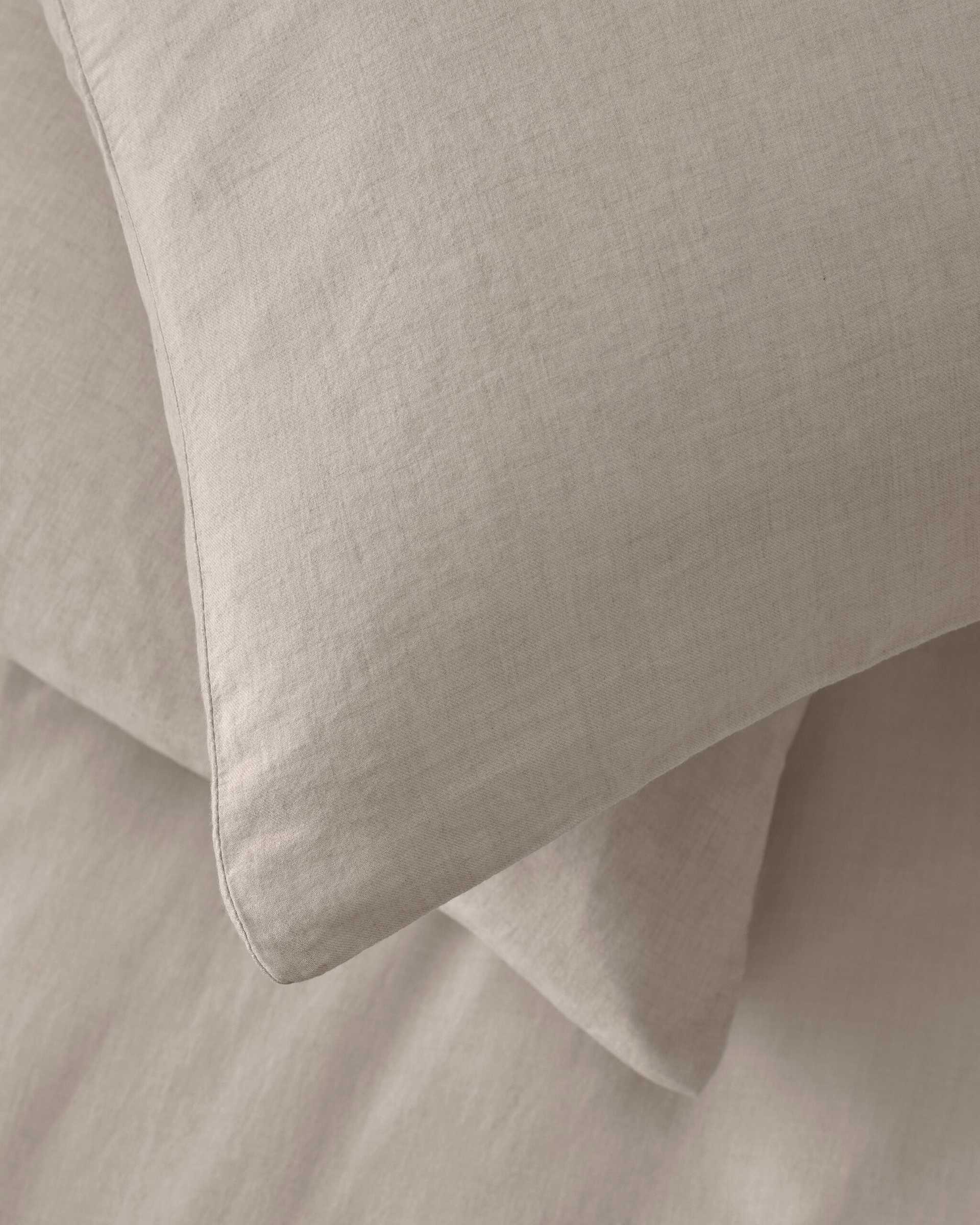
One clear example is St Geneve’s Smir Pillow Cases Set. The fabric is listed as 85% cotton and 15% cashmere, woven in a diagonal twill. It is a pair of pillowcases, not a cashmere-filled pillow. The cotton-rich blend and the weave are the relevant details: together, they describe what the covering is made of and offer a more useful picture than the word “cashmere” alone.
Why combine cotton and cashmere?
Cashmere is valued for its fine, soft feel and warmth relative to its weight. Cotton brings a different set of qualities: it is familiar in bedding, comfortable against the skin and used in a wide range of woven fabrics. In a cotton-cashmere blend, the two fibers can contribute different characteristics to one cloth. The exact result depends on the fiber quality, yarn, finishing and construction—not just the percentages printed on a label.
In the Smir pillowcases, cotton makes up most of the stated composition. Cashmere accounts for 15%. That proportion is worth noticing because it helps set realistic expectations. This is not pure cashmere bedding, nor does the smaller share mean the fabric will automatically feel a particular way to every person. It identifies the recipe; the finished hand depends on how that recipe has been made into fabric.
A blend can be appealing when someone wants a softer, more elevated textile while retaining cotton as the primary fiber. But it is best to avoid turning fiber descriptions into guarantees. “Cashmere” does not, by itself, tell you whether a pillowcase will feel cool or warm, drape smoothly, resist pilling or suit sensitive skin. Those experiences are shaped by multiple variables, including the weave, yarn, surface finish and the sleeper’s own preferences.
The useful question is not simply, “Does it contain cashmere?” It is, “What is the composition, how is it woven, and does that combination fit the way I use and care for bedding?” That small shift from a luxury label to practical details can make comparisons far more meaningful.
The diagonal twill detail
Smir pillowcases use a diagonal twill weave. Twill is a woven construction recognizable by its diagonal surface pattern. Instead of a plain, grid-like appearance, the interlacing threads create a subtle line or rib that travels across the fabric. The effect may be quiet, but it gives a textile a distinct look and hand.
Weave matters because fiber content is only one part of a fabric’s identity. Two textiles made from the same fibers can behave and feel differently when their yarns and structures differ. Twill’s diagonal construction can give a cloth a smooth, softly textured surface, which is why the Smir description emphasizes both the weave and its refined feel. Still, a weave name is not a full performance report. It does not alone determine breathability, warmth or durability; those depend on the complete fabric and how it is finished.
The product information lists a fabric weight of 100 grams per square metre. Weight can help with comparison, but it should be read in context rather than treated as a comfort score. A lighter fabric is not automatically cooler in every bedroom, and a heavier one is not necessarily warmer in every situation. Room temperature, duvet weight, personal preference and the rest of the bedding all play a part.
For anyone drawn to tactile details, the twill is part of the appeal: it gives the pillowcase a surface character beyond a plain cotton cover. For someone focused on simple daily function, the material composition, set contents and care instructions may matter more. Both are sensible ways to evaluate a pillowcase; the best choice depends on what you notice and value when you make the bed—and when you turn in.
What a cotton-rich blend may feel like at bedtime
Pillowcases sit at a particularly personal crossroads between textile and routine. They touch the face for hours, move as a sleeper shifts position and need regular laundering. A blend that looks beautiful in a product description also has to work in that everyday setting. Cotton’s familiar presence in bedding may make a cotton-rich composition feel like a more approachable way to explore cashmere than a case made entirely from the luxury fiber.
But comfort is individual. Some sleepers prefer crisp, cool-feeling percale; others like the smoothness of sateen or the texture of a woven twill. A cotton-cashmere blend is not a universal upgrade over those options. It is one material combination among many, and a person who runs warm, sleeps with a particular skin sensitivity or prefers a very crisp surface may want to weigh the blend and construction carefully.
Cashmere’s reputation for softness can also encourage shoppers to expect a dramatic difference from any product that includes it. The proportion, yarn quality and fabric construction temper that expectation. In a blend that is predominantly cotton, the cashmere is part of the fabric’s character, but it does not erase the cotton or make the item equivalent to pure cashmere. Reading the full composition keeps the promise in proportion to the product.
Good bedding is often less about chasing a single celebrated fiber and more about finding a combination that feels right in a real bedroom. If you can, handle comparable fabrics before choosing. If you are shopping from a description, use the stated fiber percentages, weave, weight and care requirements as a practical checklist—not as a substitute for your own comfort preferences.
Breathability, warmth and the limits of labels
Descriptions of cotton-cashmere bedding sometimes emphasize a balance of warmth and breathability. These terms can be useful, but they are not precise performance measurements unless they are supported by specific testing. A fiber label tells you what materials are present; it does not, on its own, predict exactly how warm a pillowcase will feel in your room.
Cotton is commonly used for bedding because it can make comfortable, breathable fabrics. Cashmere is associated with softness and insulation in apparel and textiles. In a blended pillowcase, the experience reflects the interaction of the two fibers with the weave and fabric weight. A diagonal twill, for example, contributes its own structure and surface feel. The complete fabric—not one ingredient in isolation—is what meets the sleeper.
There are other influences, too. A pillowcase used beneath a thick duvet in a heated room may feel different from the same fabric used in a cool bedroom with lighter covers. Hair products, skin-care products and personal preferences can affect how often a case needs washing. If you are trying a new textile, give attention to the first few nights and adjust the rest of your bedding if the overall setup feels too warm or not warm enough.
For people with allergies or sensitive skin, no fiber should be assumed to be automatically suitable. Reactions can relate to many factors, including dyes, finishes, detergent and the person’s individual sensitivities. Check product details and care guidance, and consider advice from a qualified health professional if you have a persistent concern. A material name is helpful information, not a medical assurance.
Care: machine washable still means read the label
One practical detail distinguishes the Smir pillowcases from some luxury textiles that require more delicate handling: the product information describes them as machine washable. That can make a cotton-cashmere blend more workable for regular bedding than a dry-clean-only item. The listing does not, however, replace the garment or care label supplied with the actual set. Always follow the instructions provided with the product, especially if they are more specific than a general online description.
For any delicate or blended bedding, a cautious routine is a sensible starting point when consistent with the care label. Wash similar colors together, avoid harsh treatment and choose a cycle appropriate to the instructions. If the label specifies a temperature, detergent type, drying method or other restriction, follow it rather than relying on assumptions about what cotton or cashmere can tolerate. The proportions of a blend do not tell you the safest laundering method by themselves.
Regular washing helps keep pillowcases fresh, but unnecessary heat or rough handling can put stress on fabric. A care routine should balance hygiene with the textile’s needs. Make sure cases are fully dry before returning them to the bed, and store clean bedding in a dry place. If you are uncertain about a care symbol, consult the manufacturer’s guidance instead of testing an unfamiliar method on a favorite set.
It is also useful to think beyond washability when comparing options. A washable fabric may fit a household that wants straightforward upkeep, while another shopper may prioritize a particular hand or weave and be comfortable with more involved care. Neither approach is inherently better. The right pillowcase is one whose maintenance requirements you can realistically follow over time.
How to compare cashmere pillowcases
Shopping for cashmere pillowcases can feel like navigating a small forest of luxury language. A few questions cut through the thicket and help distinguish useful information from a general mood of softness.
- Where is the cashmere? Confirm whether it is in the pillow fill, the outer cover or the pillowcase. These are different constructions.
- What are the exact fiber percentages? Look for a complete composition, such as the Smir case’s 85% cotton and 15% cashmere, rather than relying on a headline alone.
- How is the fabric constructed? Note whether it is a twill, plain weave, knit or another structure. Construction can influence surface texture and drape.
- What is the fabric weight? Treat the number as one point of comparison, not a stand-alone measure of softness or warmth.
- What does care require? Check the actual washing and drying guidance before deciding that a product fits your household routine.
- What is included? Verify whether the listing is for a single case, a pair or an entire pillow, and check dimensions when they are provided.
- Are the claims specific? Concrete details—fiber shares, weave and care—are more useful than broad promises of luxury or comfort.
This checklist can also help you compare a cotton-cashmere pillowcase with pure cotton, linen or other blends. The goal is not to crown one fiber the winner. It is to understand what you are buying and whether its feel, upkeep and construction make sense for your bed.
Is a cotton-cashmere pillowcase the right fit?
A cotton-rich cashmere blend may appeal to someone who enjoys the familiar character of cotton bedding but is curious about a touch of cashmere in the fabric. The diagonal twill provides a noticeable construction detail, while machine-washable care, as stated in the product information, may be a practical advantage for regular use. The Smir set includes two pillowcases, making the listing clear about what is being considered.
It may be less compelling for shoppers whose top priority is a specific feature not established by the description—such as a particular cooling performance, a certified organic composition or a precise fit for an unusually sized pillow. Those details should be verified rather than inferred from the presence of cashmere. Likewise, anyone seeking an actual cashmere pillow fill should look for that construction explicitly; the Smir set is a pillowcase product.
Price can also shape the decision. A luxury fiber may raise expectations, but value depends on more than a name. Consider how often the cases will be used, whether the care instructions suit your habits, how much you value the twill surface and whether the stated blend matches your preferences. A considered purchase is less about buying the most prestigious fiber and more about choosing a textile you will enjoy maintaining and sleeping on.
There is no single perfect pillowcase for every sleeper. The useful comparison is between real details: composition, weave, weight, care and fit. Once those are clear, a cotton-cashmere blend can be judged on its own terms rather than on the glow of the word “cashmere.”
The takeaway
Cashmere in a pillowcase is not the same as cashmere inside a pillow. St Geneve’s Smir Pillow Cases Set offers a specific example: 85% cotton and 15% cashmere, made in a diagonal twill and described as machine washable. The blend makes cotton the dominant fiber, with cashmere contributing to the fabric’s overall character; the twill adds a distinct woven texture.
For a useful decision, look past the headline. Check where the cashmere is used, read the proportions, consider the weave and weight, and follow the care instructions supplied with the item. Those details tell a clearer story than a luxury label alone. Whether the result earns a place on your bed comes down to a familiar but important test: does the fabric suit your preferences, your routine and the way you actually sleep?